4626 West Jefferson Blvd. Fort Wayne, Indiana 46804


Dental Implants Heal: What to Expect During the Healing Process

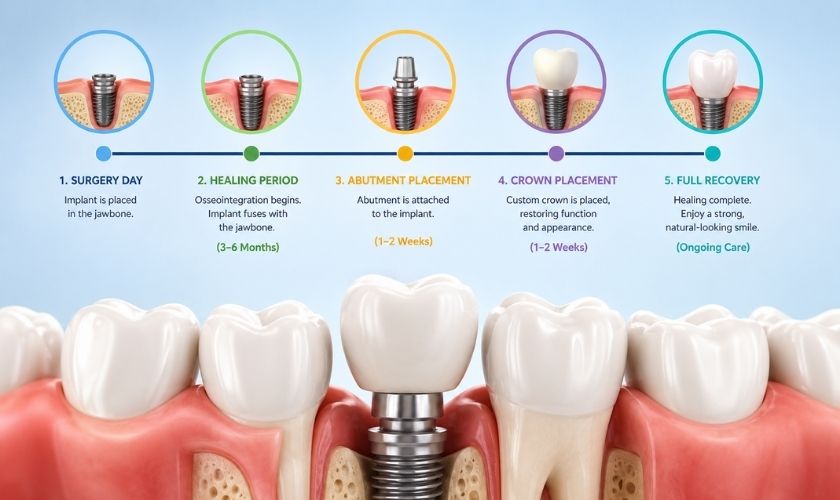
Dental implants usually heal in stages over several months, and most people feel “normal” again within a couple of weeks, even though the bone is still integrating with the implant post for 3–6 months. Full mouth dental implants often need around four to six months before the final teeth are placed, depending on health, jawbone quality, and how well post‑op instructions are followed. Understanding the healing cap, the key healing stages, and what to expect at each step helps patients feel more confident and prepared for treatment.
What happens when dental implants heal?
After an implant is placed, the bone and gums go through a structured healing process that allows the titanium post to fuse with the jawbone in a process called osseointegration. Soft tissue (gum) healing is relatively fast, but the deeper bone changes that make the implant stable take several months to complete. During this period, the dentist may use a healing cap or healing abutment to guide gum shape and protect the implant until the final crown or bridge is fitted.
Main dental implant healing stages
Most practices explain implant recovery in clear stages so patients know what to expect week by week and month by month. While exact timelines vary, the big phases are quite similar across single and full mouth dental implants.
- Immediate post‑surgery (first 24–72 hours)
- Early soft‑tissue healing (days 3–14)
- Osseointegration (about 2 weeks to 3–6 months)
- Inside the bone, the implant surface and jawbone gradually lock together, creating a stable foundation for the future tooth.
- This integration phase can take around three to six months for many patients, although smokers, people with uncontrolled diabetes, or those needing bone grafts may take longer.
- Healing cap or abutment phase (about 1–2 weeks)
- Final restoration and long‑term adaptation
Full mouth dental implants healing time
Full mouth dental implants (often called full arch or “All‑on‑X” implants) follow the same biological healing rules, but they usually involve more implants and a larger area of surgery. As a result, the overall timeline can be similar but sometimes slightly longer depending on the number of implants, bone grafting, and bite complexity.
- Many clinics quote a typical full mouth implant healing window of around four to six months before the final fixed bridge is fitted.
- Patients frequently receive a temporary bridge or denture during healing, allowing them to smile and function while the implants integrate beneath the gums.
Good candidates with strong bone, no smoking habit, and good oral hygiene may be closer to the four‑month mark, while those with extensive grafting, systemic conditions, or complex bites might stay on the longer end of the range. Regular follow‑up visits are crucial in full mouth cases so the dentist can monitor the bone, adjust bite forces, and detect any early signs of overload or inflammation.
What is a dental implant healing cap?
A dental implant healing cap (also called a healing abutment) is a small metal or resin component that screws onto the implant and sticks slightly through the gum. Its role is to protect the internal part of the implant and gently guide the gum to heal in a natural collar shape around where the future tooth will emerge.
- Healing caps are usually placed after osseointegration or sometimes at the time of the first surgery in “one‑stage” procedures.
- Once the gum has shaped nicely around the healing cap, the dentist removes it and attaches the final abutment or restoration, using this gum contour to create a more natural‑looking emergence profile for the crown.
Patients may feel light pressure or soreness for a few days after a healing cap is placed or changed, but this typically fades quickly. Careful brushing around the area and avoiding hard foods directly on the healing cap helps prevent irritation and keep the tissue healthy.
Tips to support faster, smoother healing
Even though the implant healing process largely follows biology, patients can significantly influence their comfort and long‑term success with simple lifestyle and home‑care choices. Dentists often give written post‑operative instructions, but the core principles are broadly similar between clinics.
- Follow all post‑surgery instructions
- Protect the surgical area
- Maintain gentle but thorough oral hygiene
- Use a soft toothbrush and recommended mouthwash, keeping the rest of the mouth very clean while being cautious around stitches and the healing cap.
- Once the dentist gives the go‑ahead, cleaning around the implant daily and continuing regular check‑ups are key to preventing peri‑implant gum problems long term.
- Watch for warning signs
How long do dental implants take to heal?
Dental implant healing typically takes three to six months, depending on the individual and the type of implant procedure. In the first few days after surgery, mild swelling, soreness, and tenderness are normal as the gums begin to heal. Within one to two weeks, the soft tissue usually recovers, and discomfort significantly reduces. The longest part of the process is osseointegration, where the implant fuses with the jawbone to create a stable foundation. This stage is essential for long-term success and can take several months. For more complex procedures, such as bone grafting or full-mouth dental implants, healing may take slightly longer. While some patients receive temporary teeth during healing, complete internal healing continues beneath the surface until the implant is fully secure.
How to heal faster after dental implants?
Healing faster after dental implants requires proper care and healthy habits. Following your dentist’s post-surgery instructions is the most important step. Keep the area clean by gently brushing and rinsing with a recommended mouthwash, but avoid disturbing the implant site. Stick to soft, nutritious foods and stay hydrated to support tissue repair. Avoid smoking, alcohol, and vaping, as they significantly slow healing and increase the risk of implant failure. Get plenty of rest during the first few days and avoid strenuous activities that could increase swelling. Applying cold compresses can help reduce inflammation early on. Regular follow-up appointments also ensure your dentist can monitor healing and address any concerns before they become serious.
Frequently Asked Questions
- How long do dental implants take to heal?
Most patients experience initial soft‑tissue healing within about one to two weeks, but full bone integration commonly takes around three to six months. - Is dental implant surgery painful during healing?
Some soreness and swelling are normal for a few days, yet most people describe the discomfort as manageable with standard pain medication and rest. - What are the main dental implant healing stages?
Typical stages include immediate post‑surgical recovery, early gum healing, osseointegration, healing cap or abutment placement, and final crown or bridge attachment. - What is a dental implant healing cap?
A healing cap is a small connector placed on top of the implant to protect it and shape the gum tissue before the permanent tooth or bridge is fitted. - How long is the full mouth dental implants healing time?
Full mouth implant cases often need around four to six months before the definitive full arch prosthesis is placed, though this varies with bone quality and health. - When can I eat normally after dental implant surgery?
Soft foods are recommended for at least several days, with many people gradually returning to more normal chewing over two to four weeks as comfort improves. - Can smoking affect dental implant healing?
Yes, smoking is associated with slower healing and a higher risk of implant failure, which is why many dentists strongly advise quitting before surgery. - How do I know if my dental implant is healing properly?
Decreasing pain and swelling, stable gum tissue, and a firm implant without looseness are positive signs, but only a dentist can confirm healing clinically and radiographically. - Do dental implants always require 6 months to heal?
Not always; some straightforward cases with very good bone can be restored sooner, while others with grafting or systemic conditions may need longer than six months. - What happens if a dental implant does not heal correctly?
If an implant fails to integrate or becomes infected, it may need cleaning, additional treatment, or removal, followed by a rest period and possible replacement later.