4626 West Jefferson Blvd. Fort Wayne, Indiana 46804


Dental Implant Recovery Timeline: From Surgery to Crown
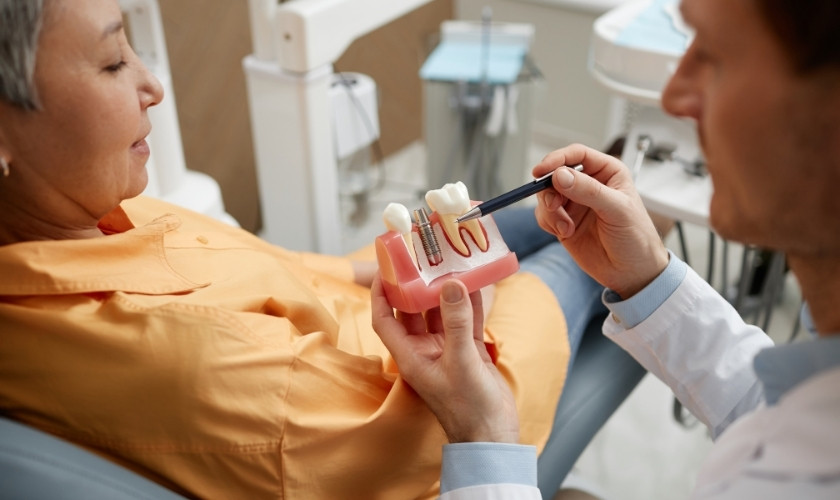
Replacing a missing tooth is a process, not a single appointment. Although the surgical site may feel much better within several days, healing beneath the gum continues for months. Understanding each stage can make treatment feel more manageable and help patients prepare for eating, work, follow-up visits, and final restoration.
The complete timeline often ranges from three to nine months. Treatment may take longer when tooth extraction, bone grafting, or a sinus lift is necessary. Health conditions, smoking, oral hygiene, jawbone density, and the number of teeth being replaced can also affect recovery.
At Family Dentistry & Aesthetics, Dr. Gilbert helps patients understand what to expect at every stage. If you are considering dental implants in Fort Wayne, an evaluation can provide a timeline based on your oral health and treatment needs.
How Long Do Dental Implants Take to Heal?
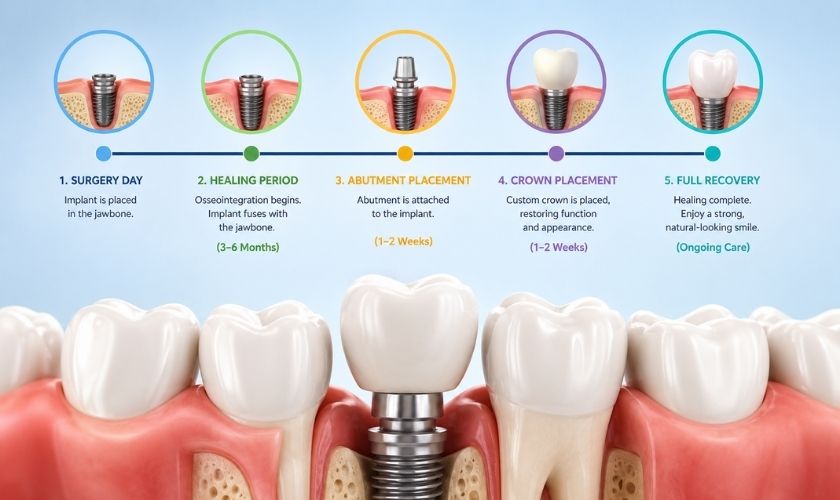
Dental implants usually need about three to six months to integrate with the jawbone. This biological process is called osseointegration. New bone gradually forms around the titanium post, creating a stable foundation for the replacement tooth.
The gums heal much sooner, often within one to two weeks. However, surface healing does not mean the implant has fully bonded with the bone. Placing the final crown too early may expose the implant to pressure before it becomes stable.
The Dental Implant Recovery Timeline
Stage 1: The First 24 Hours After Surgery
Minor bleeding, tenderness, and swelling are common during the first day. A blood clot forms over the surgical site, initiating the healing process. Patients should rest and avoid unnecessary physical activity.
Follow these early recovery guidelines:
- Apply a cold pack as directed to limit swelling.
- Eat cool, soft foods such as yogurt, applesauce, or smoothies consumed without a straw.
- Do not spit forcefully or disturb the surgical area.
- Take prescribed or recommended medication as instructed.
- Avoid smoking, alcohol, and strenuous exercise.
A dentist may also provide instructions for controlling bleeding and cleaning the surrounding teeth.
Stage 2: Days Two Through Seven
Swelling often peaks around the second or third day, then gradually improves. Mild bruising and tenderness may continue. Many patients return to work within one or two days, depending on the complexity of surgery and their type of work.
Choose soft foods that require little chewing. Eggs, oatmeal, pasta, fish, soup, and mashed vegetables are practical choices. Avoid sharp, crunchy, sticky, or very hot foods. Brush the rest of the mouth normally, but clean the surgical site only as instructed.
Stage 3: Weeks One Through Two
By the end of the second week, the gums typically look and feel considerably better. Any non-dissolving sutures may be removed during a follow-up visit. Persistent bleeding, worsening pain, fever, pus, or swelling that increases after improving requires prompt attention.
This review allows the dentist to check the gum tissue and confirm that early implant healing is progressing normally.
Stage 4: Months Two Through Six
This is the main osseointegration period. The implant may feel comfortable, but bone remodeling is still occurring below the gumline. Patients should avoid placing unapproved chewing pressure on the area.
The healing time for dental implants in Fort Wayne varies by patient. Bone quality, implant location, diabetes control, tobacco use, gum health, and grafting can all influence the schedule.
Our dentist, Dr. Gilbert, encourages patients to attend every review so stability and tissue health can be monitored.
If you have questions or notice any changes during this phase, visit our dental office rather than waiting for your next scheduled checkup.
Stage 5: Abutment Placement and Gum Healing
Once integration is confirmed, an abutment may be attached to the implant. This small connector supports the future crown. If the post was covered beneath the gum, a minor procedure may be needed to expose it.
The gum generally needs another one to two weeks to shape itself around the abutment. Some dental implants receive a healing abutment during the initial surgery, which may eliminate the need for an additional uncovering procedure.
Stage 6: Impressions and Final Crown Placement
After the bone and gums are ready, digital scans or impressions capture the position of the implant and surrounding teeth. The crown is designed to fit the bite and complement the smile.
At the final visit, the restoration is attached, and the bite is checked. The dentist may make small adjustments to prevent uneven pressure. Patients can usually begin chewing normally, although gradual use may feel more comfortable at first.
What Can Extend the Recovery Period?
Not every patient follows the same schedule. Treatment may take longer when:
- A damaged tooth must be extracted to heal.
- Bone graft material needs time to mature.
- A sinus lift is required in the upper jaw.
- Several dental implants are being placed.
- Gum disease must be controlled first.
- Smoking or uncontrolled diabetes interferes with healing.
- The implant needs more time to achieve stability.
A bone graft commonly adds several months to the overall treatment plan. More extensive sinus augmentation can further extend the process.
How Can You Support Successful Healing?
Keep the mouth clean, attend follow-up visits, and follow food restrictions. Use any rinse exactly as directed. Do not start brushing directly over the surgical site until the clinical team approves it.
Smoking can restrict blood flow and interfere with tissue repair. Patients should discuss cessation support before surgery. Long-term implant care also requires daily brushing, interdental cleaning, professional cleanings, and routine examinations.
Complete Your Smile With Implant Care At Our Dental Office
Every recovery journey is different, and a personal evaluation can provide a clearer timeline from implant surgery to final crown placement.
If you are considering dental implants, contact Family Dentistry & Aesthetics. Book an appointment today to begin restoring your smile, chewing comfort, and confidence.
Frequently Asked Questions
Can I work the day after implant surgery?
Many patients return to non-strenuous work within one or two days. More complex surgery may require additional rest. Arrange an evaluation so the clinical team can provide recovery instructions suited to your procedure.
When can I eat normally again?
Soft foods are recommended during early healing. Firmer foods can be reintroduced gradually after the surgical area becomes comfortable and the clinical team approves. A follow-up visit helps confirm when normal chewing is appropriate.
Is throbbing pain normal after surgery?
Mild to moderate discomfort can occur for several days and should gradually decrease. Severe, worsening, or persistent throbbing may signal a problem. Contact the dental office promptly for an assessment.
Can the crown be placed immediately?
Some patients qualify for an immediate temporary tooth, but not every implant can support pressure right away. Bone density and initial stability must be evaluated before a restoration is placed.
How do I know whether the implant has healed?
Comfort alone cannot confirm osseointegration. Clinical examination and imaging may be used to assess stability and surrounding bone. Attend each recommended review before moving to the crown stage.
What happens if I need a bone graft?
Bone grafting strengthens an area with insufficient jawbone. The graft may require several months to mature before or alongside implant placement. A consultation can determine the sequence and expected treatment length.