4626 West Jefferson Blvd. Fort Wayne, Indiana 46804


An Essential Guide to Porcelain Crowns
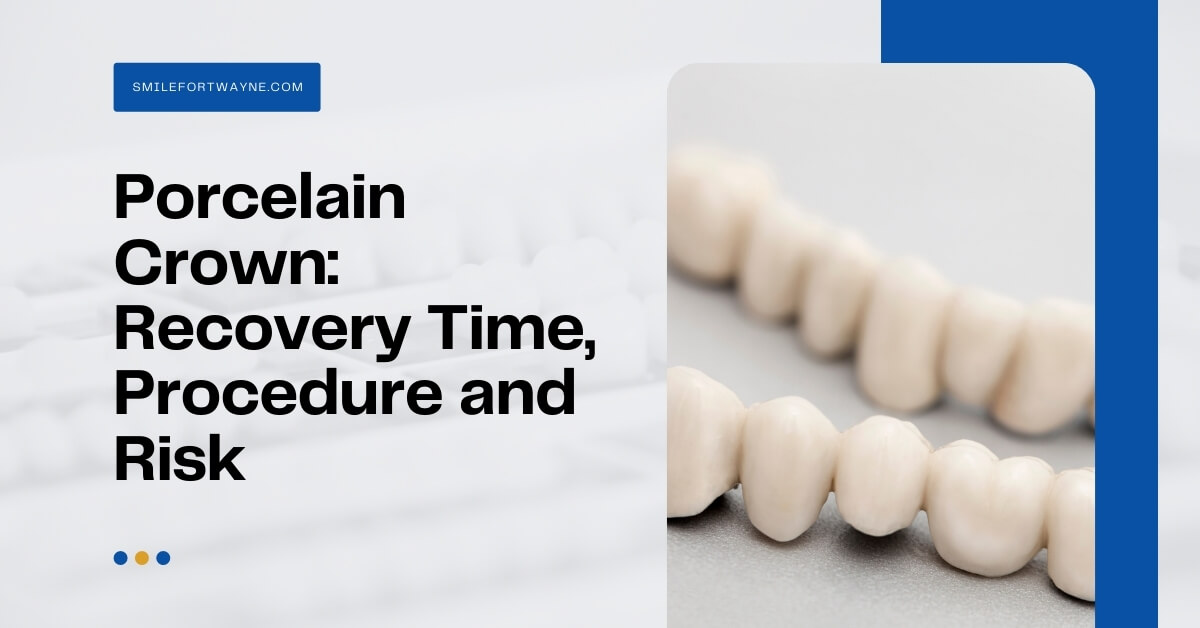
Over time, teeth can become damaged. The damage can result from a variety of causes, such as dental decay, trauma, or even routine use over time. A dental crown takes the form of a tooth-shaped “cap” that is fitted onto your natural tooth.
The porcelain crowns or ceramic crowns, as they are also known, are one of the options available for those with damaged teeth. Crowns or caps that fit over a tooth restore its size, strength, and function to a tooth that is bonded to it.
Porcelain crowns are made of tooth-colored porcelain to mix in with your other natural teeth – not only do they reinforce the tooth or teeth being capped, but they also make your smile more visually beautiful.
A skilled dentist can place porcelain crowns with minimum dental preparation, preserving the majority of the tooth beneath the cap.
Dental crown application is a specialized skill set that, when done correctly and precisely, may dramatically improve the longevity, strength, and beauty of your teeth.
Is a porcelain crown good?
A dental crown is a wonderful alternative for long-term use since it is durable and lasts between 5 and 15 years, ensuring patient satisfaction.
When taken into account alongside other methods of dental restoration or not treated at all, dental crowns have a high success rate. This has been supported by several scientific investigations that have looked into their use.
A Step-by-Step Process of Porcelain Crown Procedures
Dental crowns are usually recommended if a tooth has significant decay or if the filling is too large to be supported by the tooth. Prostheses appear like actual teeth; however, they are hollow in the middle to cover the degraded framework. As well as addressing aesthetic concerns, dental crowns are designed to help patients restore function to their teeth.
First Visit and Consultation
To begin, your dentist will examine your mouth and teeth to understand whether porcelain crowns are the best treatment for your oral health issues. The initial meeting also provides an opportunity for you to discuss important components of your treatment.
Getting ready
To prepare for the hollow component of the crown, the dentist would have to remove part of the enamel from the problematic tooth. To prevent the tooth from looking bulky and unnatural, this process must be conducted properly. It is the step that takes the longest.
Concluding impressions
To ensure that a dental crown will fit perfectly and appear natural, the dentist takes an impression of the prepared tooth. It is important to take heed of this information as the outcome of the prosthesis may be affected by it.
Constructing a temporary crown
Cosmetics are not the only purpose of this process. When the enamel has been removed from a tooth, temporary crowns provide a barrier to protect the exposed crown. Keeping the prepared tooth in position is also essential.
Permanent crown placement
It usually takes two weeks for a permanent crown to be completed. The patient will be recommended to see the dentist as soon as it is ready for placement. However, before it can be installed, the dentist must carefully clean the tooth. As a result, a local anesthetic may be used again. To avoid problems, the dentist will double-check the location of the crown and its surrounding components.
Minor modifications may be made by the patient to ensure aesthetics, longevity, and optimal bite. The dentist will also provide the patient with instructions to ensure that the crown serves its purpose for as long as possible.
7 Reasons Why People Get a Porcelain Crown
During your first office visit, your dentist will perform a comprehensive examination and provide you with advice concerning your specific condition. These are some of the most common reasons why you may need a dental crown:
- To prevent a fragile tooth (due to decay, for example) from breaking. Hence, reconstruction of broken teeth by holding fragments together.
- An already fractured or severely worn tooth can be repaired with this method
- When there aren’t many teeth remaining, a large filling is used to cover and support a tooth.
- A dental bridge is held in place with a huge filling.
- Having stained teeth or crooked teeth concealed
- Concealment of dental implants
- Making a cosmetic alteration
4 Problems to Look Out For With Porcelain Crowns
In many cases, a crown can provide a great solution to a severe problem with one of your teeth. It’s important to be aware, however, that certain risks and complications may occur after you receive a crown.
Teeth sensitivity
In the immediate aftermath of the crowning, the newly crowned tooth may be sensitive as the anesthetic wears off. Heat and cold sensitivity may occur if a nerve remains in the capped tooth. You may be advised to use toothpaste designed for sensitive teeth when cleaning your teeth. An excessively high crown is usually the cause of pain and sensitivity when biting down. For any such issue, contact your dentist. There is a straightforward solution to this problem.
Allergic reaction
The metals used to construct dental crowns are usually composed of several different types. It is possible to have an allergic reaction to the metal or porcelain in the dental crown. However, this is a very unusual occurrence.
Chipped crown
Crowns made entirely of porcelain are prone to chipping occasionally. The crown can remain in place even with minor chips in the enamel. In cases where there are multiple chips or the chip is large, the dental crown may need to be replaced.
Loose crown
The cement that holds the crown in place can sometimes wash away from beneath the crown. In addition to allowing the crown to become loose, this also opens the door to bacteria entering and causing damage to the remaining tooth. Make your dentist aware of any loose crowns.
Crown falls off
A dental crown has the potential to fall out. A faulty fitting or a lack of cement are frequently responsible for this. You should contact your dentist as soon as possible if this occurs to you. You will receive precise instructions on how to care for your crown and tooth until you can come in for an appointment. You may be able to have your crown re-cemented by your dentist. The crown must be created from scratch if it cannot be reattached.
How much do porcelain crowns usually cost?
Porcelain crowns are priced based on many factors, including your location and dental condition.
Most dentists in the United States charge $1,000 – $1,500 for all-porcelain crowns for the front teeth, but some may charge considerably more. The price of crowns for back teeth may be higher, but these crowns are usually only used on teeth in the anterior region (front teeth).
The material of the crown, its location, the size of the tooth, and any existing damage to the tooth or surrounding teeth also impact the cost of dental crowns.
Do you believe you require a dental crown or crowns? Speak with your dentist to obtain a better idea of how much the treatment will cost and whether or not your insurance will cover it.
Frequently Asked Questions About Porcelain Crowns
Are dental crowns or porcelain crowns painful?
Not with an experienced dentist who has installed numerous porcelain and dental crowns with success!
These customized crowns or caps are attached to the tooth, fitting over the tooth and restoring the tooth to its original strength, size, and function. In cases where fillings and other forms of dental treatment cannot repair an irreparably damaged tooth, crowns are the best solution available.
What to expect after the porcelain crown procedure?
In the following days and weeks, you can eat and drink normally, brush and floss your porcelain crown in the same manner you do the rest of your natural teeth, and return to your normal oral hygiene routine.
For at least a few weeks after the crown surgery, you should also use a toothpaste designed specifically for sensitive teeth.
The sensation of the crown in your mouth may take some time to adjust to; if it persists for more than a few days or a week, you may need to see your dentist for an adjustment to make sure the new crown fits your bite correctly.
How long do porcelain crowns last?
In addition to being durable and sturdy, porcelain crowns must also be maintained, evaluated regularly, and possibly replaced if they are chipped or broken. Porcelain crowns with small chips can be repaired with composite resin, but more severe chips require the replacement of the entire crown.
Your dentist should be consulted immediately if you feel your crown is loose. As bacteria seep beneath a loose crown, more tooth decay may occur as well as other complications.
You Might Be Interested: Teeth Whitening Treatment: Is It Safe