4626 West Jefferson Blvd. Fort Wayne, Indiana 46804


Dental Bonding Vs. Veneers: Differences, Pros & Cons

Cosmetic dentistry can help you achieve your perfect smile and healthy mouth, such as closing a distracting gap, repairing a chipped tooth, or improving the appearance of severely damaged, stained, or discolored teeth. You can achieve a beautiful smile through a variety of cosmetic procedures. Dental bonding and veneers are common procedures to improve the appearance of individual teeth and entire smiles.
When it comes to improving the appearance of your teeth, you may be wondering if dental bonding or veneers are the better options. While both procedures can provide excellent results, there are some key differences between them. Let’s look at the pros and cons of dental bonding vs. veneers. Start your smile makeover plan by comparing these two!
Dental Bonding
Cosmetic dentists often use dental bonding, in which the tooth’s surface is roughened, and a fresh layer of resin is bonded to it to improve a tooth’s appearance. When the composite resin material has set, it is molded and polished to finish the job. To put it simply, dental bonding is not designed to endure forever. Cosmetic dentists commonly recommend dental bonding for minor flaws in teeth that are not subject to significant biting force, such as the front teeth. Dental bonding can last anywhere from three to ten years, depending on how much work needs to be done and how well the patient takes care of their teeth. Since it is a quick, painless, and less invasive procedure, it requires a single visit to the doctor’s office.
Benefits
- In bonding teeth, little to no preparation of the tooth structure is necessary.
- Bonding is a more cost-effective alternative.
- Children with broken or chipped teeth are included in most treatable patients.
- The process often requires only one office visit.
- There is no downtime required.
- The majority of procedures can be performed without the use of anesthetic.
Dental Bonding is best for people who want to:
- Restore broken or damaged teeth
- Restore the natural beauty of your smile by fixing tooth discoloration.
- End the throbbing discomfort caused by exposed tooth roots caused by gum recession.
- Tighten up the spacing in your teeth.
- Alter the form of the teeth.
Porcelain Veneers
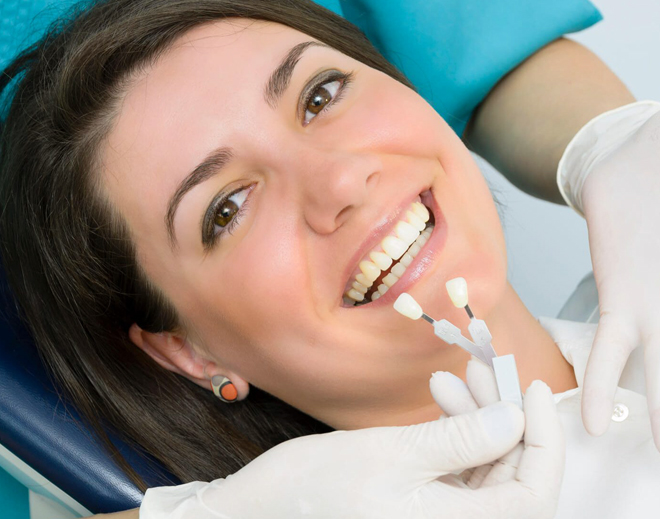
Porcelain veneers, also known as dental veneers, are extremely thin shells that are bonded to the front of your teeth. The form is customized to fit snugly over your tooth and give it an overall appearance that is consistent with the rest of your teeth. Veneers can mask a single stained or damaged tooth or be bonded to a row of teeth to give them a uniform, brilliant whiteness that won’t wear off over time. For the veneer to fit correctly and give your tooth a uniform, smooth appearance, a small amount of the tooth’s surface needs to be removed. Although veneer insertion rarely causes any discomfort, multiple office visits may be necessary to provide a perfect, long-lasting fit.
Benefits
- A porcelain surface will not absorb any stains.
- Veneers made of porcelain, which is both white and translucent, have a natural gloss that cannot be achieved by bonding.
- They can last up to 20 years with proper care.
- Veneers can give you a brilliant white, consistent smile in a short time.
Veneers are the best option for people with:
- Severely discolored and stained teeth
- Broken and cracked teeth
- Worn-out teeth
- Large gaps and overlapping teeth
- Crooked teeth
Dental Bonding vs Veneers
To make an informed decision, consider these four factors:
Durability
Veneers for teeth are designed to last between 10 and 25 years. While neither porcelain nor dental bonding resin are indestructible, the latter is the more reliable option. Bonding is a durable material that can be used to restore teeth in a variety of situations.
Cost
Porcelain veneers, which are more expensive than tooth bonding, are used to cover the front surfaces of teeth. Veneers can be a cost-effective alternative to bonding, which may need to be repaired or replaced at some point due to their durability and longevity. Veneers are frequently used as an alternative to professional teeth whitening for masking stains. Replace missing teeth or fix chips with dental bonding.
Goals
Depending on the desired correction, a combination of dental bonding and veneers may be the optimal method. If you want whiter teeth, you should attempt professional teeth whitening first. If you are unhappy with the results, veneers may be your next best alternative.
Maintenance
Cosmetic bonding and porcelain veneers require similar maintenance. You must adhere to a daily oral hygiene regimen. Additionally, it is essential to avoid activities that could damage the bonding substance or porcelain, such as participating in sports without a mouthguard or chewing on tough foods (like ice or jawbreaker candies).
Read more:5 Alternatives to Dental Implants
Call Smile Fort Wayne To Learn More About Veneers and Dental Bonding
If you are looking for a way to improve your smile without having to undergo a full dental restoration, veneers and dental bonding may be the perfect solution for you. Be sure to call the most trusted dentist in Fort Wayne today. Smile Fort Wayne can help you determine if this is the right treatment option for you and provide you with all of the information you need to make an informed decision about your oral health.