4626 West Jefferson Blvd. Fort Wayne, Indiana 46804


Cap vs. Crown: Which is Right for You?
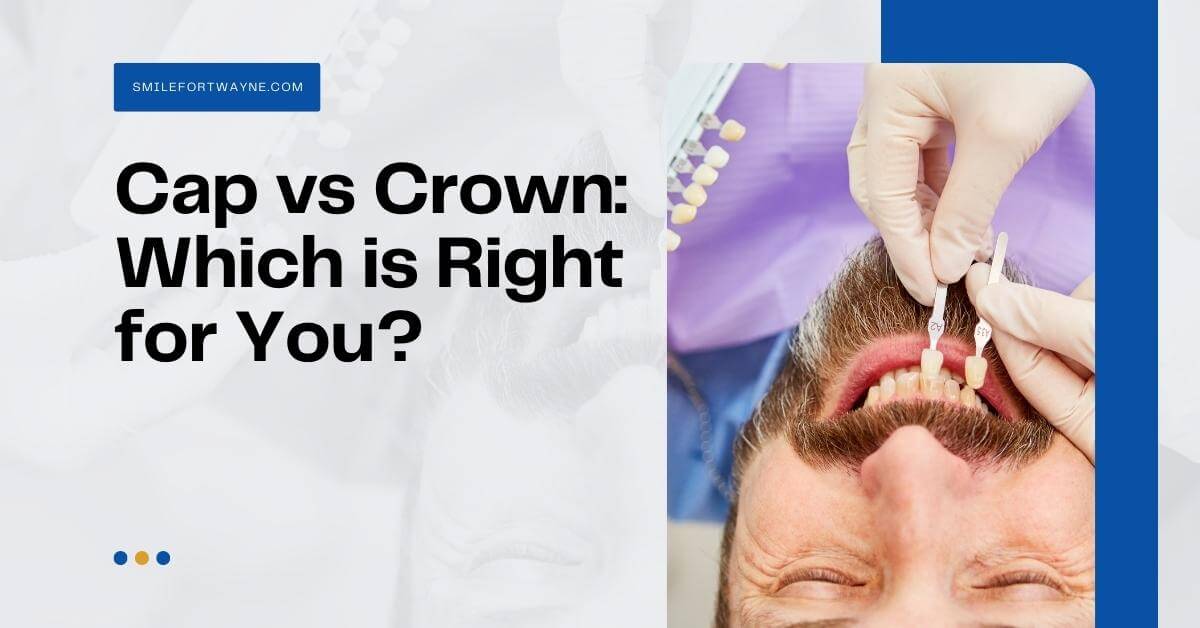
Tooth decay, deterioration (weakening) of the previous restoration, or fracture of your tooth can all cause the loss of tooth structure. Dental implants can fix them. Replacing lost teeth or missing tooth structure and removing decay-prone areas that might cause you discomfort in the future is what your dentist means by restorations.
Among these various teeth restorations are the dental crown and dental cap. These are terms you’ve probably heard thrown about. Are you aware of the difference? If you want to know more and consider getting a dental restoration method, keep on reading!
Cap vs. Crown: The Difference
There’s no distinction between a cap and a crown. For a long time, dental crowns were referred to as caps, and the name is still used by elderly individuals and others who do not work in dentistry. A dental crown is commonly employed when a tooth is too damaged to be fixed with a standard dental filling, such as a serious cavity or root canal. Brushing and flossing regularly and keeping up with your dental hygiene check-ups are simple ways to avoid this damage. A dentist will usually cover the tooth with a material that is either porcelain, metal (gold), or a combination of the two.
A dental crown can be used for several reasons, including:
- Dental bonding is used to repair or recolor a damaged or discolored tooth.
- To prevent additional harm to the fragments of a fractured or broken tooth.
- To serve as a pillar in the mouth for a bridge or denture.
When deciding on a crown, it’s critical to keep the following things in mind:
- Strength
- Durability
- Cost
When Is A Crown Needed?
Your dentist will examine your specific condition and guide various treatments after doing a comprehensive examination during your initial office appointment. There are several frequent reasons for needing a dental crown, including:
- An entire tooth that has been severely decayed or damaged by a cavity
- To hide a dental implant.
- To fill in a huge hole.
- One that has undergone root canal therapy (especially posterior teeth)
- Broken or fractured natural tooth.
- To get your teeth in the right position (correcting the bite)
- For the sake of aesthetics: To get a more appealing and attractive smile, you can level your teeth in form, size, and color.
- Shield compromised teeth.
Materials of A Dental Cap
Crowns can be made from a variety of dental materials, but the most popular are:
- Metal Alloy: Materials such as platinum, gold, palladium, and other non-precious metals fall under this category.
- Dental Ceramic: Zirconia and porcelain, for example, may be tinted to match the rest of your teeth. Also, ceramic crowns are a sturdy and adaptable metal-free substance with a porcelain-like look.
- Porcelain-fused-to-metal: In this case, porcelain (the exterior) is fused with a metal crown (inside). PFM crowns are another name for them.
- Glass: Anywhere in the mouth may be used to get a natural appearance.
- Porcelain: Although less robust than bonded porcelain, it gives a highly natural appearance for cosmetic purposes, such as capping front teeth.
Dental Crown Procedure
If you require a custom-made crown, be prepared to visit the dentist several times. Depending on the type of crown, the procedure may vary. In general, getting a crown involves:
- Your tooth will be prepared by your dentist, who may perform a simple filling or a more involved procedure such as a root canal.
- They will take a mold of your teeth to ensure that the crown will fit perfectly.
- While the permanent crown is being prepared, a temporary crown is used to keep the natural tooth safe. Take careful care of this temporary cap and avoid eating hard or sticky foods to protect it from breaking.
- Your dentist should have the crown ready in approximately a week.
Cost of Crowns
Depending on the choice of crown material and the level of preparation needed, this might be anything from little to extensive. For example, metal dental crowns are less expensive and more affordable than all-porcelain dental crowns.
Before placing a crown, a core build-up may be needed to safeguard the tooth’s integrity. Dentists can do a gingivectomy or mild gum surgery to improve the tooth’s appearance or prognosis. Worst case, you may require a root canal, which might treble the expense.
Pros and Cons
If a filling or veneer isn’t enough to restore your smile, a dental crown may be the better option. However, like all teeth restorations, this one also has its pros and cons.
Advantages
- Long-lasting protection. Crowns are far more durable than other dental procedures. A well-cared-for dental crown has an average lifespan of 15 years. However, if properly cared for, they may last for up to 30 years.
- Expect your teeth to be whitened. Crowns are often made of porcelain or ceramic by dentists. Additionally, these materials are stain-resistant, which means they won’t discolor as you get older. It would be like a complete smile makeover.
- Aligning or fixing your bite. The visual advantage of aligned teeth is a strong reason to have crowns.
- Reduces pain. A decayed tooth can be uncomfortable. A dental crown can relieve irritation, sensitivity, and pain.
- Fixing damages. It’s possible that your dentist can also help you with other difficulties, like spacing or form.
Disadvantages
- Cost. There are a variety of factors that influence the price, including the type of crown used and the processes required. However, you should expect to pay roughly $1,000 on average.
- Possible Need for Repairs. Dental decay, TMJ, and infection are all serious complications if a crown is not put on correctly.
- It may lead to tooth sensitivity. It can cause pain or even harm to neighboring or opposing teeth by wearing them down.
- Chance for nerve damage. If a tooth is filed down too much, it runs the risk of damaging the nerve.
Call Family Dentistry & Aesthetics To Learn More
If you are still unsure of which type of dental restoration is best for you, please do not hesitate to contact the most trusted dentist in Fort Wayne. We would be happy to help you make the decision that is right for your oral health and overall well-being. Thank you for reading!