4626 West Jefferson Blvd. Fort Wayne, Indiana 46804


Teeth Whitening and Its Impact on Dental Restorations: What to Know
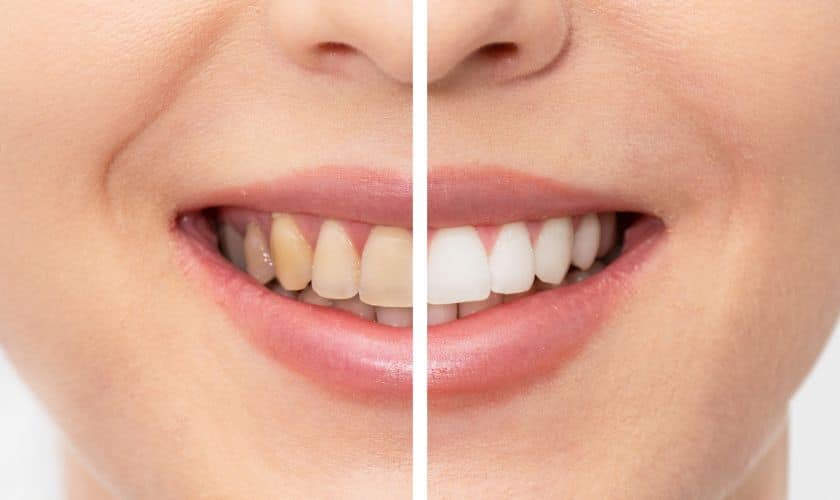
A bright, white smile is often associated with good oral health and aesthetics. Many individuals turn to teeth whitening to achieve that radiant smile, but what about those who have dental restorations?
The impact of teeth whitening on dental restorations:
Understanding Dental Restorations:
Dental restorations, such as crowns, veneers, and fillings, are commonly used to repair and enhance teeth. These restorations can be made from various materials, including porcelain, ceramic, composite resin, or metal. Understanding the type of restoration you have is crucial when considering teeth whitening.
Teeth Whitening and Natural Teeth:
Teeth whitening products primarily target natural tooth enamel. Whitening agents, typically hydrogen peroxide or carbamide peroxide, work to break down stains and lighten the natural color of teeth. However, these agents may not have the same effect on dental restorations.
Impact on Porcelain and Ceramic Restorations:
Porcelain and ceramic restorations are commonly used for crowns and veneers. While natural teeth respond well to teeth whitening, these materials do not bleach in the same way. As a result, teeth whitening treatments may not alter the color of porcelain or ceramic restorations. It’s essential to discuss expectations with your dentist beforehand.
Composite Resin Restorations:
Composite resin, often used for dental fillings, may show some response to teeth whitening. However, it’s important to note that the degree of whitening can vary, and it might not match the surrounding natural teeth precisely. Your dentist can guide you on potential color discrepancies.
Metal-Based Restorations:
Metal-based restorations, such as amalgam fillings, do not respond to teeth whitening. Attempting to whiten natural teeth around metal restorations may accentuate the contrast, making the dental work more noticeable. In such cases, alternative cosmetic procedures may be considered.
Consulting with Your Dentist:
Before undergoing any teeth whitening treatment, it’s crucial to consult with your dentist. They will assess your dental restorations, discuss the potential impact of whitening, and recommend the most suitable approach. In some cases, alternative cosmetic solutions, such as replacing existing restorations, might be considered for a more uniform result.
Alternatives for a Uniform Smile:
For individuals with noticeable dental restorations, alternatives like replacing old restorations or exploring cosmetic dentistry options may provide a more consistent and satisfying outcome. Your dentist can guide you on the best course of action based on your specific situation.
Teeth whitening can be a transformative experience for many individuals, but its impact on dental restorations requires careful consideration. By understanding the nature of different restorative materials and consulting with your dentist, you can make informed decisions to achieve a brighter, more harmonious smile. Always prioritize professional guidance to ensure the health and aesthetics of both your natural teeth and dental restorations.